
We work with Canada’s leading retailers. Here’s what we’re seeing.
Getting a front-row seat into what Canada’s leading retailers are focused on (we’re talking retailers and restaurant brands of all sizes, from coast to coast) gives us a unique vantage point into what’s actually happening on the ground.
And here’s what we’re seeing firsthand.
Despite 15+ years of headlines telling us otherwise, brick-and-mortar isn’t dying.
In fact, retailers are doubling down. They’re still moving into new markets, opening new locations, and refreshing existing stores.
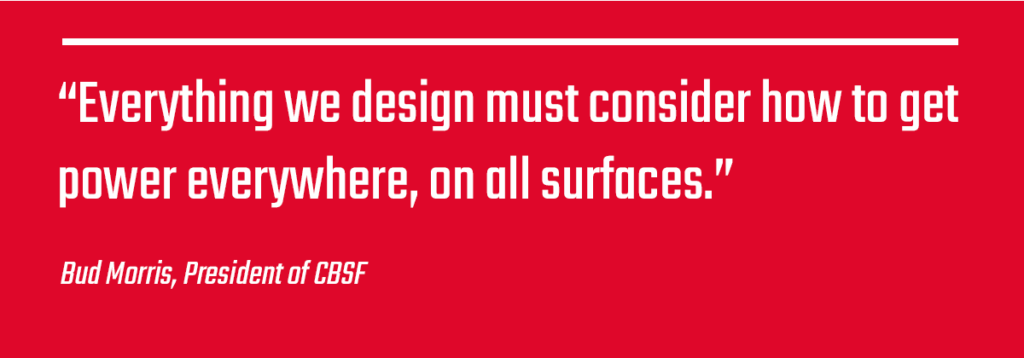
This shouldn’t surprise anyone reading this. As Bud Morris, President of CBSF, explains:

And the smartest retailers know it.
But while physical retail isn’t going anywhere, it is evolving:
- Malls are being reinvented into mixed-use hubs.
- QSR, pharmacy, grocery, beauty, home goods, banking, and even refuelling are becoming more complex, more digital, and more interconnected.
- Stores are no longer just places to shop. They’re showrooms, distribution centres, test labs, and brand experiences wrapped into one.
From the conversations we’re part of, the RFPs coming across our desks, and the projects we’re design-building, three clear trends are shaping how physical environments will be planned and built in 2026.
Here’s what Canada’s leading retailers are focused on.
Trend 1: Build Stores That Can Change as Fast as Retail Does.
Retailers aren’t rebuilding stores the way they used to. Instead of fully demolishing a space by tearing everything down to the studs every five to ten years, they’re prioritizing lower-cost refreshes and modular systems that can evolve with their strategy.
It’s faster, more cost-effective, more sustainable, and far easier to scale across all locations.
What retailers are shifting towards:
- Installing fixtures that can be reconfigured, moved, resized, or added onto
- Reducing landfill waste by refreshing instead of rebuilding
- Saving millions in capital costs by avoiding full tear-downs
- Rolling out design changes faster across multiple stores
- Creating environments that can evolve with merchandising, category resets, or brand updates
- Customizing fixtures with built-in cable chases and power access for future digital components
- Designing layouts that adapt to supply chain changes, assortment shifts, and seasonal strategies
Trend 2: Everything Must Be Designed and Future-Proofed for Unified Commerce and Omnichannel Experiences.
In 2026, retailers aren’t just talking about unified commerce and omnichannel experiences; they’re building stores that can support them. And by embracing this direction, they’re embracing powered, digitally integrated fixtures, displays, and store environments.
This means power and cabling are core components of every build.
Gone are the days when teams would drill holes in fixtures to squeeze in a cable or mount a screen wherever it fit. Every shelf, every fixture, every display now has to account for power, data, digital screens, cooling, ventilation, and components that may not even exist yet.
If you’re not planning for digital from day one, you’ll end up rebuilding the space twice.
What retailers are planning for:
- Power access on every fixture surface
- Cable chases built into shelving, millwork, and metalwork
- Proper cooling and ventilation for screens and digital components
- Signage, sensors, lighting, and devices that can be added later
- Preparing for digital needs that may not even exist yet
- Eliminating costly retrofits and preventing structural compromises
- Designing stores that support omnichannel fulfillment in real time
Trend 3: Retailers Are Reinvesting in Destination Spaces, Flagships, and Pop-Up Experiments.
Even in a digital-first world, the search for the “destination space” is back in full force. And as Bud Morris explains, retailers are constantly experimenting.
But some of the best examples are already in front of us. Bass Pro Shops draws families in with its giant fish tanks. Indigo turns stores into creative hubs where parents and kids linger, increasing dwell time.
Flagships and pop-ups are part of the same strategy.
Retailers are using high-profile locations to test new materials, experiment with wow-factor elements, and gather real-world feedback before rolling out changes.
Meanwhile, pop-up shops provide a low-cost, high-flexibility way to reach new audiences, leverage vacant real estate, and experiment without long-term commitments.
And the guiding idea behind all of it? Bud put it best:

What retailers are leaning into:
- Creating destination zones that give customers a reason to visit and stay
- Using flagships as innovation labs to test materials, layouts, and wow-factor elements
- Evaluating which flagship ideas move into chainwide rollout
- Building multi-sensory environments that encourage browsing, lingering, and discovery
- Launching pop-up shops to test products, categories, and experiences
- Activating seasonal strategies using temporary, low-cost builds
- Using vacant or underutilized real estate to reach broader audiences
- Leaning into novelty, showmanship, and surprise as strategic tools
 The Bottom Line: Retail Environments Are Getting More Complex.
If there is a throughline to the conversations we’re having with retailers, it’s this: stores are becoming more complex.
With:
- More digital components
- More power and cooling requirements
- More pressure for modularity and rapid change
- More multi-use space requirements
- More omnichannel fulfillment demands
- And, higher expectations for extraordinary, destination-worthy environments
If it feels like retail is changing fast, it’s because it is.
But at the same time, as Bud puts it,
“Restaurants and physical retail spaces aren’t going anywhere. They’re here to stay.”
What’s clear is that the next generation of retail environments requires a sound business case, mixed with creative flair, grounded in engineering expertise, and of course, aligned with the realities of 2026.
If your team is planning a refresh, rebuild, or next-generation store strategy, you need a partner who understands what it takes to build adaptive retail environments.
Contact our team today, and let’s plan your next project together.
Want more retail design insights? Join 400+ retail professionals who read our email newsletter full of practical advice and design ideas. https://mailchi.mp/8a889d2ab116/v