
From concept sketches to scalable store rollouts, how Canada’s Best Store Fixtures value engineers retail store design.
It almost sounds like the setup to a bad joke:
What’s the difference between a retail store design that gets built and one that gets binned?
One has a solid foundation… the other can’t stand on its own.
Ba-dum-tss. We’ll be here all night, folks.
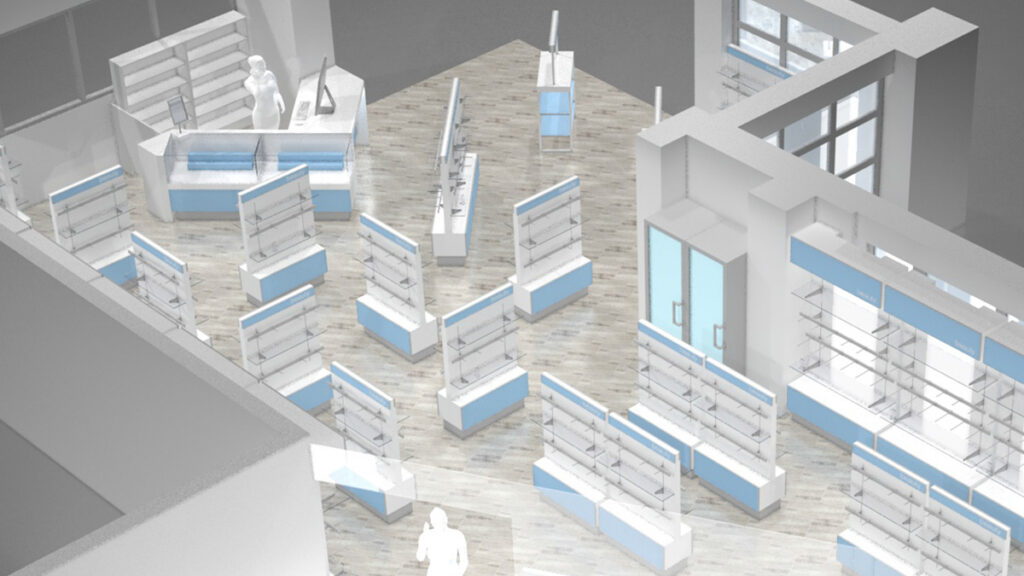
Because in the real world, the difference between a beautiful rendering and a finished store isn’t creativity alone, it’s buildability: turning ideas into custom retail fixtures, displays, and environments using available materials, sound engineering, feasible manufacturing methods, coordinated installation, and realistic timelines and budgets — at scale.
Where Design Meets Reality
In today’s retail environment (whether it’s QSR, grocery, pharmacy, banking, fashion, or home goods), the gap between a “rendering” and an “installed” fixture is where projects either build momentum or quietly unravel.
And let’s be clear: aspirational design isn’t the problem. High-end finishes, bold concepts, striking millwork, digital integrations, and innovative materials all make retail environments memorable.
The difference is knowing how to deliver that level of design in a way that survives daily traffic, performs across multi-location rollouts, and stays on budget.
Great retail store design doesn’t need to be toned down.
It needs to be engineered to scale.
 Why Some Retail Store Designs Never Make It to Rollout
Great Concepts Aren’t the Problem
The strongest retail concepts begin with strategic thinking, thoughtful architecture, brand integration, and compelling spatial design — and overwhelmingly, retail designers, architecture firms, and in-house teams nail the concept.
Where projects run into trouble is later in the process: translating those concepts into the realities of prototyping, manufacturing, shipping, and installation.
It’s not that the design is wrong.
It’s that critical build considerations weren’t addressed early enough.
Where Friction Creeps In
Common friction points include:
- Material selections that aren’t locally available, require long lead times, or fall outside budget
- Custom fixtures that weren’t engineered for modular design or repeatable production
- Overlooking the positive impact value engineering can have on the overall project cost
- Shipping, load-in, and installation realities are not defined during the design process
- Skipping prototyping and rushing into full production
This Isn’t a Creativity Problem
None of these issues stem from a lack of creativity or poor design.
They’re driven by missing key steps in the design-build process.
When design, engineering, manufacturing, and rollout operate in silos, retailers often discover buildability challenges late — when changes are more expensive and harder to resolve.
Integration Is a Competitive Advantage
The most successful retail programs bring everything together early in the process, giving retailers:
- More accurate budgeting
- Fewer redesign cycles
- Faster approvals
- Smoother rollouts
Effective retail store design doesn’t water down creativity.
It balances bold concepts with practical execution. So strong ideas move from renderings to grand openings without compromise.
With in-house retail planning, design, custom wood, metal fabrication, and more under one roof, CBSF can coordinate every step.
 What Buildable Retail Store Design Looks Like in Practice
Buildability Isn’t a Theory, It’s a Process
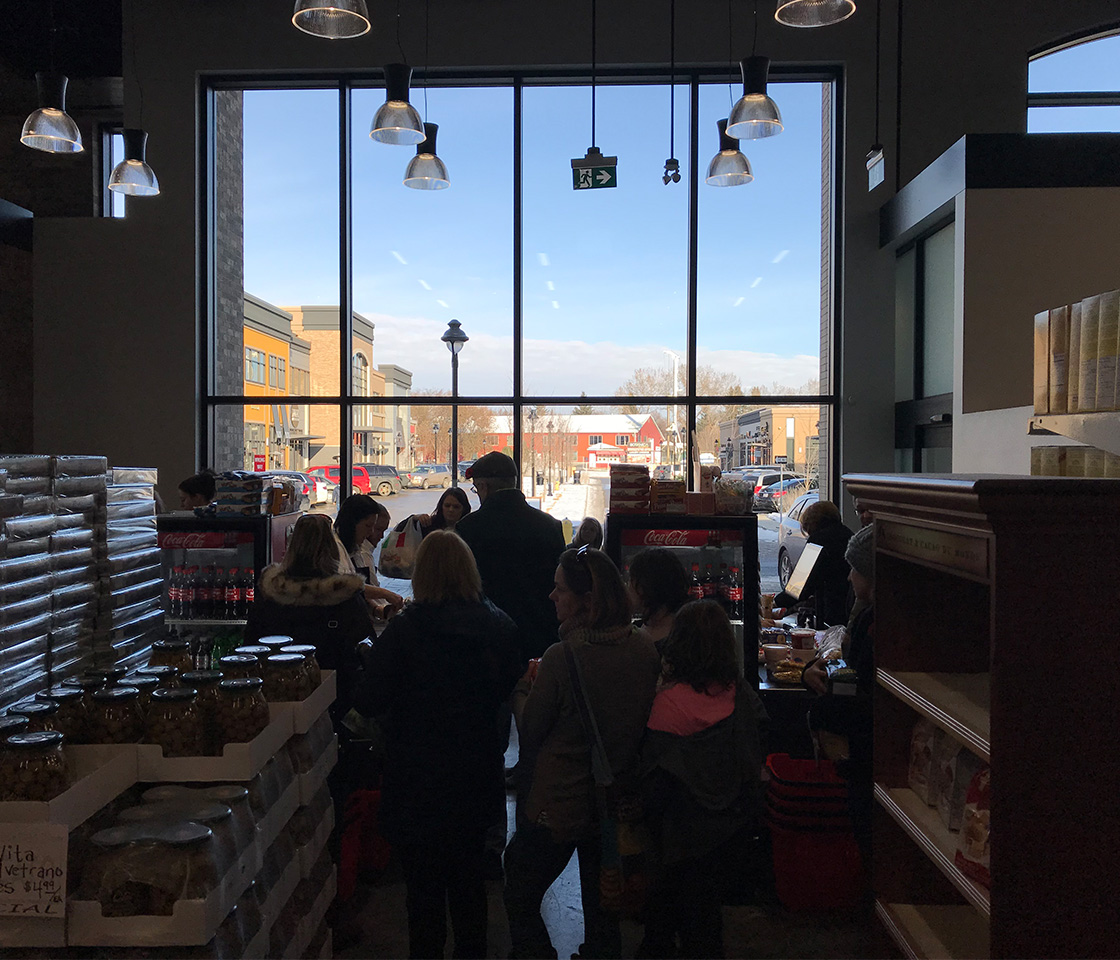
Decorative wooden crates bring warmth and texture, especially effective in grocery, bulk food, and home goods, where durability and a rustic charm matter.
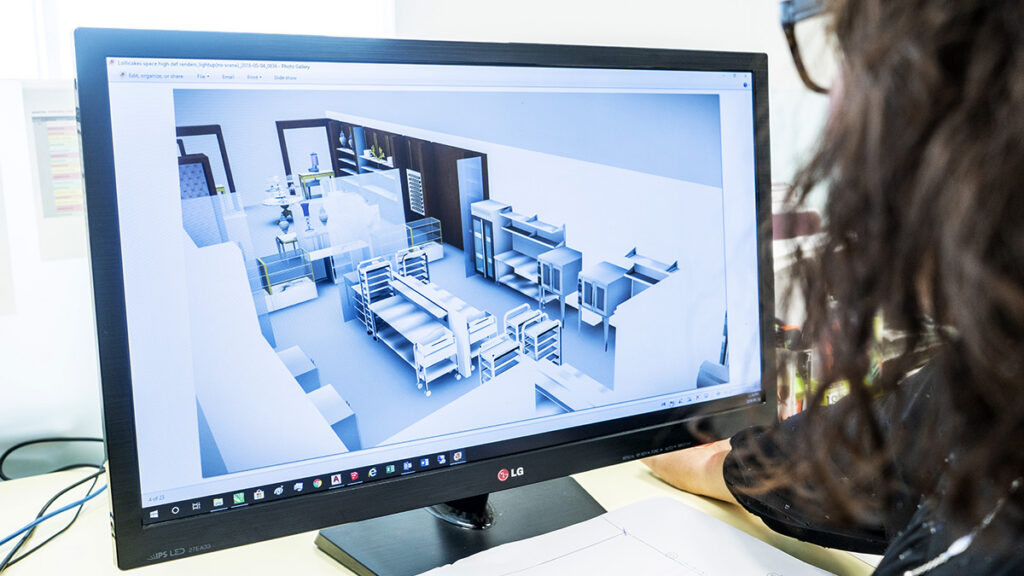
At Canada’s Best Store Fixtures, our retail design services team doesn’t stop at concept approval. It moves immediately into coordinated engineering, estimating, prototyping, value engineering, manufacturing planning, and installation strategy — all of which are nailed down before production begins.
That means:
- Fixtures are engineered for modularity and repeatable production
- Materials are selected with availability, durability, and lead times in mind
- Prototypes are tested not just for aesthetics, but for performance and assembly
- Manufacturing methods are optimized for scale
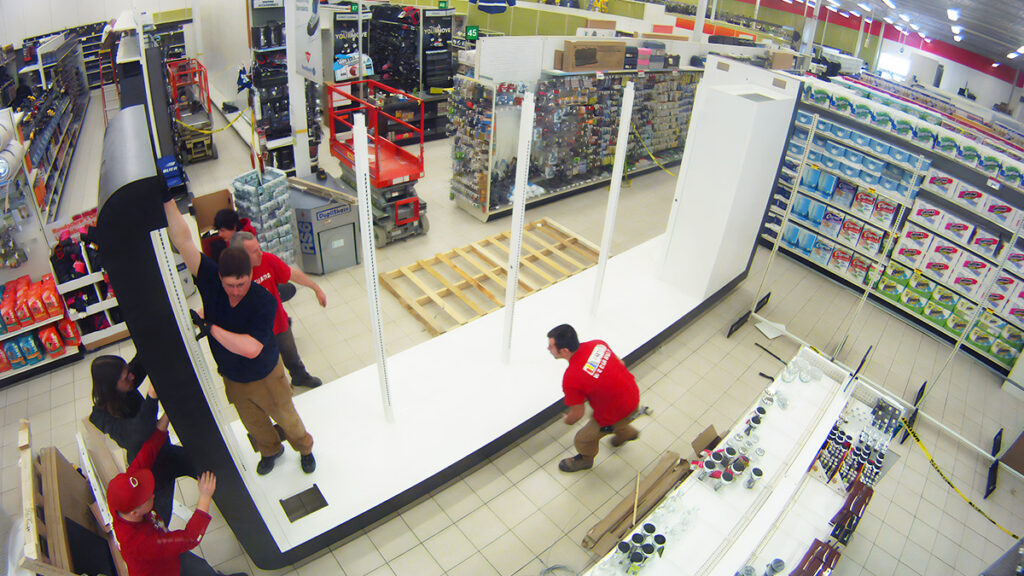
- Installation logistics are planned long before rollout begins
This integrated approach reduces redesign cycles, protects budgets, and creates predictable rollouts.
The Results Speak for Themselves
We’ve seen it firsthand with client projects like Healthy Planet or Purolator store rollouts, where fixture systems were standardized early, prototyped properly, and value engineered before production. The result wasn’t a watered-down design. It was a stronger execution, with faster site launches and fewer surprises in the field.
Because when engineering and manufacturing are part of the conversation from the concept stage, creative intent is protected.
As one of Canada’s largest retail environment design‑builders, CBSF helps retailers grow from one location to a national footprint.
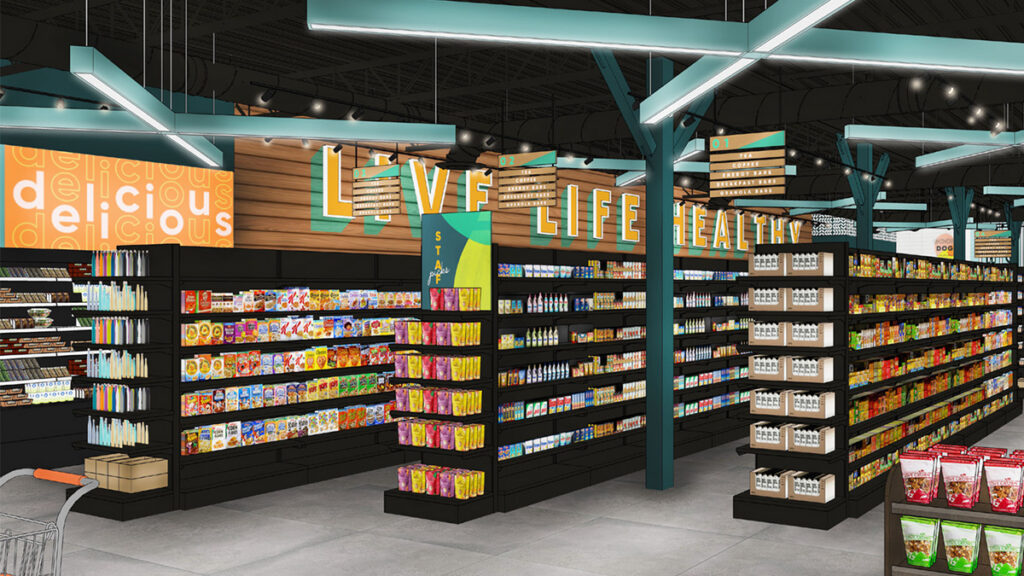 The Strategic Advantage of Retail Store Design for Scale
Retail environments today must do more than look impressive on opening day.
They must:
- Withstand daily traffic
- Adapt to seasonal merchandising
- Scale across a wide range of footprints
- Hit construction timelines
- Stay within capital budgets
Retailers who treat store design as a coordinated system, not a series of disconnected decisions, build faster, scale smarter, and operate more efficiently.
 Speak With Our Retail Store Design Services Team
Retail store design that actually gets built isn’t about limiting ambition. It’s about protecting it.
It’s about being practical, ensuring that high-end concepts, bold materials, and memorable environments don’t stall in procurement, collapse under cost pressure, or see overruns during rollout.
Canada’s leading retailers don’t just design beautiful stores, they plan stores that can be built again and again — consistently, predictably, and at scale.
Get a Project Estimate
If you’re planning a new concept, renovation, or multi-location rollout, contact our retail design services team for a project estimate.
Because the brands whose stores get built, and rebuilt, are the brands that win.
