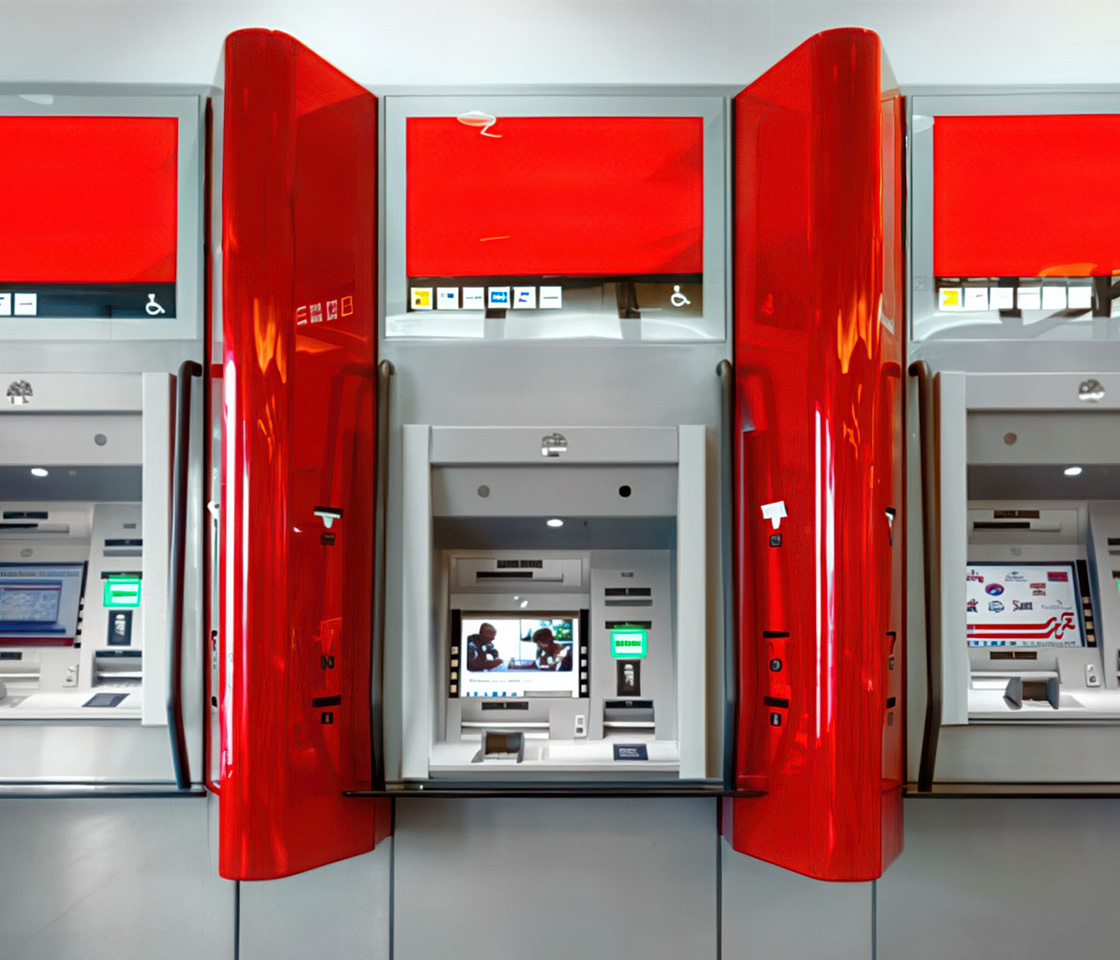
Bank branches aren’t just retail spaces; they’re high-trust environments where retail design balances security, speed, and service.
Unlike grocery, fashion, or electronics retailers, a bank branch operates under a different set of rules.
Historically, the branch is a signal of trust: part fortress, part service hub, and the place where big-ticket transactions still happen face-to-face.
On top of that, banks have to meet high expectations for professionalism, speed of service, and an engaging brand experience.
While physical branches come with operating costs, they remain key revenue engines for Canadian banks. That revenue comes primarily from high-margin advisory products (mortgages, loans, investments, insurance, and wealth management) and a wide range of service fees.
Beyond that, simply having a branch in the neighbourhood (and getting customers through the doors) helps banks acquire new customers, build long-term loyalty, gather deposits, maintain brand visibility, and grow market share.
With so much invested in branch networks, every design decision has to ensure each location performs at its best.
And to do that, branch design must balance three competing priorities.
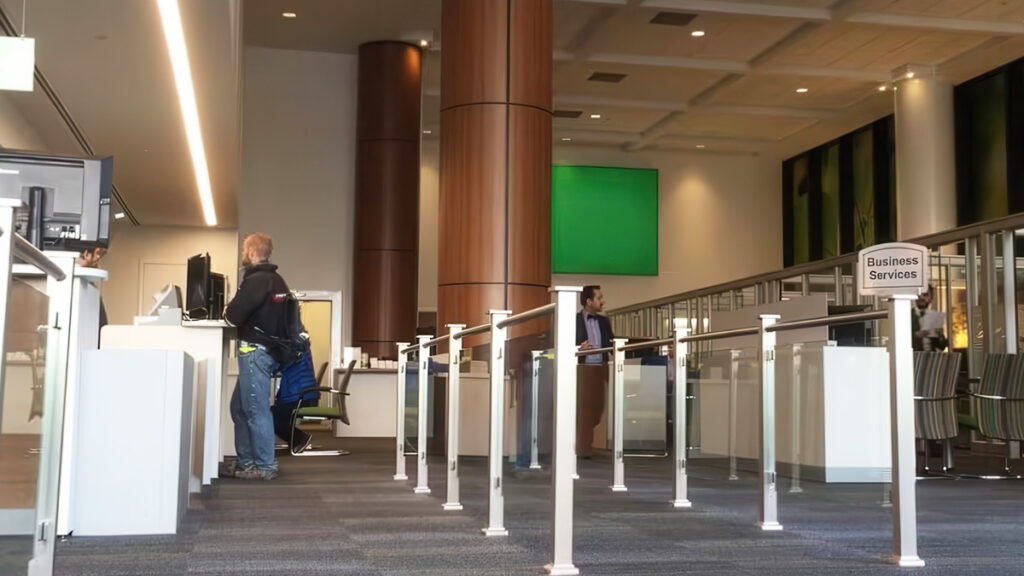 Core Design Challenges in Banking
- Security: Branches need strict control of cash, data, staff areas, and equipment. That means durable enclosures, clear sightlines, restricted zones, and surveillance integrated into the environment and fixtures. The challenge is keeping everything secure without making the environment feel closed off or intimidating.
- Speed: Efficient self-service pathways, clear zoning, and digital-first transaction flows help reduce friction from arrival to exit. But the drive for fast service can conflict with security requirements that restrict access, control flow, or add steps for staff and customers.
- Service: Customers expect a polished, on-brand environment with clear hospitality cues, private areas for financial conversations, and a layout that keeps the whole experience straightforward and comfortable. Meeting these expectations becomes challenging when safety requirements and fast service demands influence how the space must function.
The most effective way to balance these priorities is to shape the three key bank branch customer zones with security, service, and speed in mind.
And when you get these zones right, the entire customer experience is improved.
Three Customer Zones Every Bank Branch Needs to Get Right
1. The Welcome Zone
The welcome zone sets the tone the moment a customer walks in. It’s where people instantly gauge safety, professionalism, and trust. Which means every fixture, sightline, and material choice has to be engineered to guide them in with confidence.
Here’s what you must do to get the welcome zone right:
Build Millwork and Fixtures for Predictable Customer Flow
- Reception desks, check-in stations, and wayfinding fixtures must use engineered sightlines that allow staff to monitor arrivals without obstructing visibility.
- Designing with controlled entry flow in mind helps prevent congestion, improves spatial awareness, and orients customers immediately.
Choose Durable, Hospitality-inspired Material
- Podiums, lighting housings, and seating elements need scratch-resistant, high-traffic finishes that maintain a polished, professional look over years of use.
- Any material you select should reinforce your brand identity and withstand constant cleaning and heavy public contact.
Integrate Signage and Technology
- Digital screens, entry signage and directional cues should be integrated into the millwork, with concealed wiring, flush-mounts, and proper structural support. This prevents clutter, improves legibility, and helps customers instantly understand how to move through the branch.
Why This Matters
A well-designed welcome zone reduces hesitation, improves navigation, and reinforces brand trust, creating a smooth start to every customer visit.
 2. The Self-Service Zone
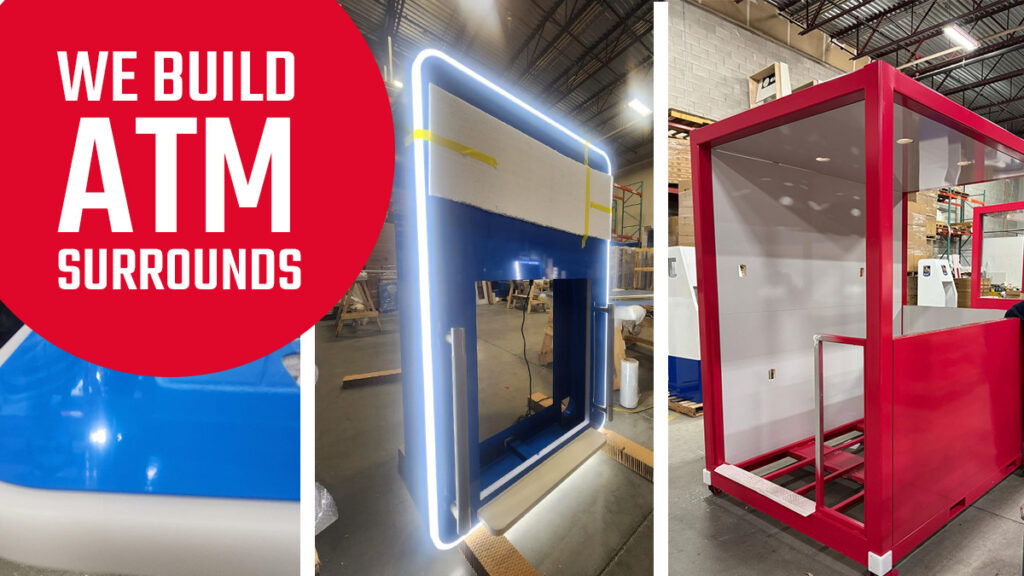
The self-service zone is where technology meets design, and for many visitors, it’s the only part of the branch they ever interact with. That means ATM surrounds, kiosks, and digital touchpoints must be engineered for durability, security, and a cohesive brand experience.
Here’s how to get the self-service zone right:
Build ATM Surrounds for Security and Longevity
- Surrounds must protect equipment, manage airflow and ventilation, and allow secure access for servicing.
- Anti-tamper panels, reinforced housings, and controlled-access locks keep electronic components secure without making the unit look overly industrial.
Integrate Technology with Millwork
- Lighting, signage, cable management, and touchscreen housings should be built directly into the fixtures – not retrofitted afterward. Cameras are typically integrated into the environment, so the millwork has to be designed to support their sightlines and wiring.
- Precision fabrication ensures that technology fits cleanly into the millwork while maintaining flush lines and ADA/AODA-compliant reach ranges.
Ensure Traffic Flow and Privacy Through Fixture Placement
- Self-service fixtures must be positioned to prevent backflow into the welcome area while maintaining clear privacy sightlines.
- Use counters, partitions, or angled fixtures to block direct sightlines and protect PIN pads, screens, and sensitive customer inputs.
Why This Matters
A well-built self-service zone makes routine transactions fast, secure, and intuitive, freeing staff for higher-value advisory work while giving customers a smooth, modern experience.
 3. The Queuing & Teller Zones
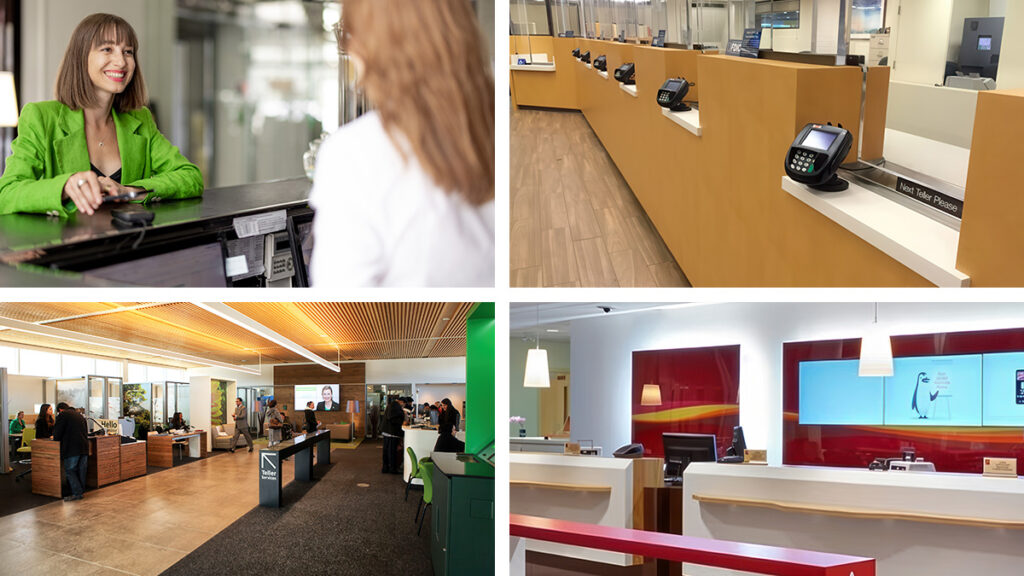
The queuing and teller zones are where customers transition from navigating the branch to completing a transaction, so the millwork, fixtures, displays, and traffic flow have to be engineered to guide customers, support fast transactions, and provide security for both customers and staff without feeling closed off.
What feels like an open, simple counter is actually one of the most technically demanding parts of a branch.
Here’s what you must do to get these zones right:
Build Fixtures That Control Flow and Set Expectations
- Queue rails, low partitions, and directional fixtures prevent bottlenecks and keep foot traffic moving in a predictable pattern toward teller stations.
- Integrated feature walls, signage, and display millwork guide customers visually and help reduce perceived wait times.
- Good queue design makes it clear where to stand, where to move next, and how the branch is organized.
Build Teller Millwork for Security, Privacy, and Efficiency
- Teller counters must incorporate secure cash-handling equipment, privacy screens, recessed monitor mounts, durable work surfaces, and reinforced under-counter storage.
- Every opening and workstation element should support fast, smooth service while protecting staff, cash, sensitive information, and equipment.
- The right combination of materials, counter height, and sightlines helps maintain openness without exposing sensitive processes.
Integrate Screens, Lighting, and Digital Tools
- Overhead lighting, cable pathways, and digital queue indicators should be planned directly into the millwork – not added after installation. Camera housings are typically integrated into the ceiling or surrounding environment, so the fixtures must be designed to support their sightlines and wiring.
- Proper placement of digital screens helps customers stay informed with rates and promotional messages, while queue-status information reduces uncertainty by showing customers where they are in line.
Why This Matters
Get these zones right and you eliminate confusion, keep lines moving, protect staff and equipment, and create an environment where service feels fast, discreet, and secure – even during peak volume.
 Why Banks Need Specialized Design-Build Partners
Building branch environments requires strict timelines, sequencing, and teams that can coordinate trades under tight bank security protocols. And when you’re rolling out multiple locations, the complexity only increases. Multi-location programs demand consistent project management, scalable and tamper-resistant fixtures, and millwork engineered for integrated technology and display systems.
A specialized design-build partner helps teams manage these realities while protecting the branch’s core priorities: security, speed, and service.
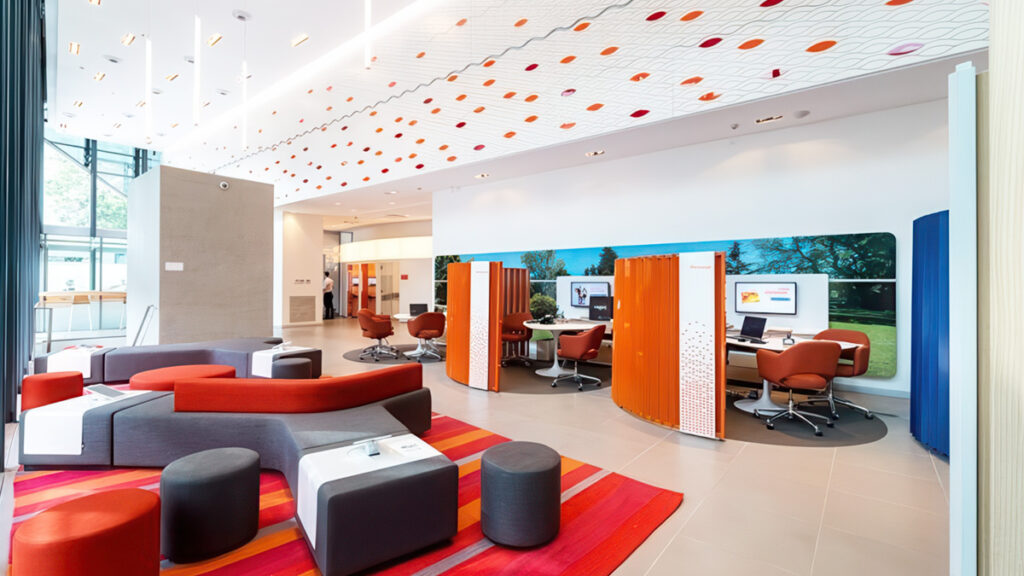 The Bottom Line
Banking teams already understand how critical layout, flow, and security are to a branch’s performance. The right fixtures, integrated technology, and well-built zones simply make those decisions easier to execute at scale.
When zones are planned and built intentionally, with fixtures and displays engineered to support flow, security, and visibility, branches function the way your team intended. Customers move confidently, staff work more efficiently, and the branch feels secure without feeling restrictive.
Well-executed zoning supports security, improves service flow, and helps transactions move faster, all of which strengthen customer trust and reinforce the branch experience you’re working to deliver.
If you’re working on a new branch program or renovation, connect with our team to learn how CBSF can help you design and build modern branch environments that get every zone right, every time.
Video Transcription
Three Customer Zones Every Bank Branch Needs to Get Right
Modern bank branches are design-built around three primary client-interaction zones, and getting them right means balancing security, service, and experience.
ZONE 1 – WELCOME ZONE
The welcome zone sets the tone the moment a customer walks in.
Check-in stations, clear wayfinding, and hospitality touches help visitors feel confident and safe.
That’s why the best welcome zones are engineered, not decorated — built with clear sightlines to guide flow and ensure visitors feel at ease in the first five seconds.
ZONE 2 – SELF-SERVICE ZONE
Next is the self-service zone — where technology meets design.
For many customers, this is the only part of the branch they interact with, so ATMs and their surrounds aren’t just functional, they’re part of the brand experience.
An ATM and its surround has to do it all: secure cash, protect equipment, manage airflow, integrate lighting and signage, and still look modern and inviting.
At CBSF, we manufacture ATM surrounds that deliver all three: security, durability, and design.
ZONE 3 – TELLER ZONE
Finally, the teller zone.
It usually includes a queuing area and an open, branded counter with built-in workstations.
That openness is great for customers but puts pressure on the details: how queues form, where screens sit, and how cash is handled.
Get those details wrong and transactions slow down.
Get them right and you create a comfortable queue, a welcoming desk, and subtle privacy — keeping service fast, discreet, and secure.
Across every zone, from the first impression to the final transaction, the details make the difference.
Because every decision, from how light falls on a counter to how an ATM surround is built, shapes how customers feel about your bank.
At Canada’s Best Store Fixtures, we bring retail strategies to life — building banking environments that are secure, functional, and built on trust.
Want more retail design insights? Join 400+ retail professionals who read our email newsletter full of practical advice and design ideas. https://mailchi.mp/8a889d2ab116/v