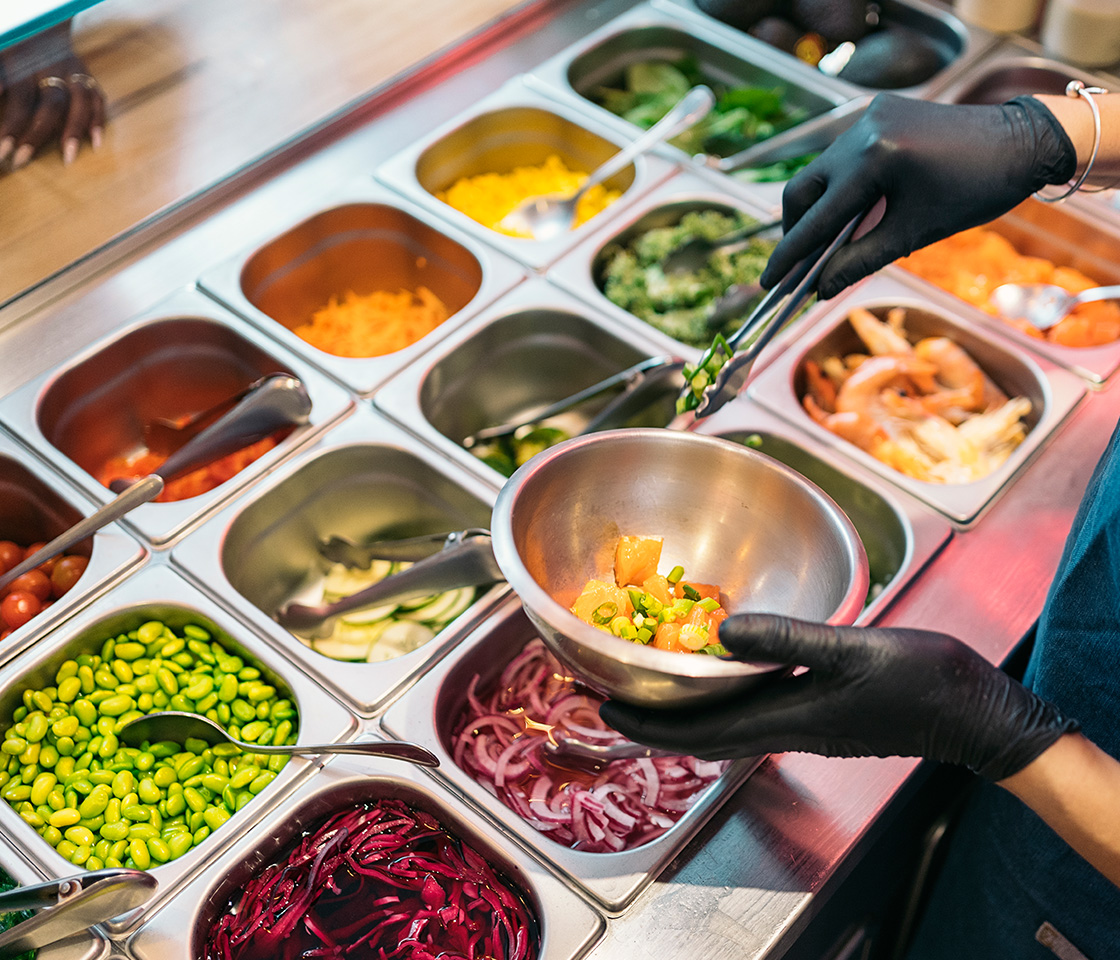
A Practical Guide to Custom Stainless Fixtures for High-Volume QSR Kitchens
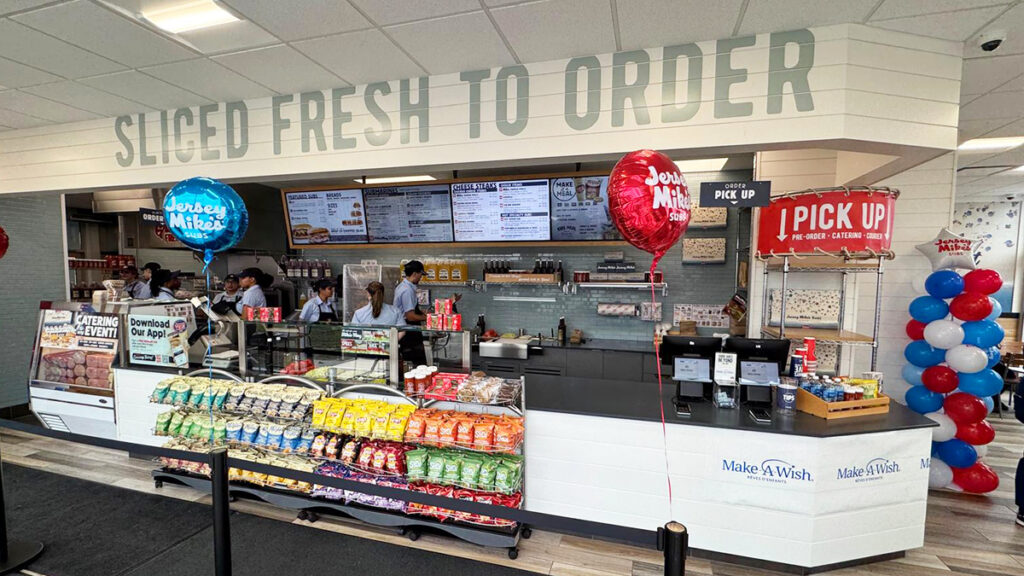
In a busy QSR, the back-of-house isn’t just a kitchen, it’s a system of connected stations.
And the difference between an efficient operation and one that struggles during the Saturday rush comes down to more than the location’s footprint.
It depends on how the space is planned, set up, and used every day.
QSR kitchens are built for speed.
High volume. Tight footprints. Repetitive workflows — where every movement is repeated hundreds of times per shift. To keep people from tripping over each other and orders moving, every station needs to work together.
This is where standard, catalogue work tables fall short. Because on paper, standard sizes pushed together in Tetris-like configurations work. But in practice, off-the-shelf work stations:
- Force designers to compromise
- Leave general contractors to manage misalignment and field adjustments
- Result in franchisees living with kitchens that are harder to run, clean, and maintain
That’s why workstation design should match how the kitchen really works, not just how the stations fit on a floor plan.
Custom stainless steel fixtures are the solution.
A better approach is to design workstations that bring together layout, equipment, and workflow from the start, reflecting how the kitchen actually operates.
This practical guide outlines how to:
- Spec the right materials
- Design stations that survive the Saturday rush
- Source fabricators who can deliver consistent results
This way, your back-of-house supports how your kitchen needs to run, every shift and every day.
1. Focus on Workflow First, Not Fixtures
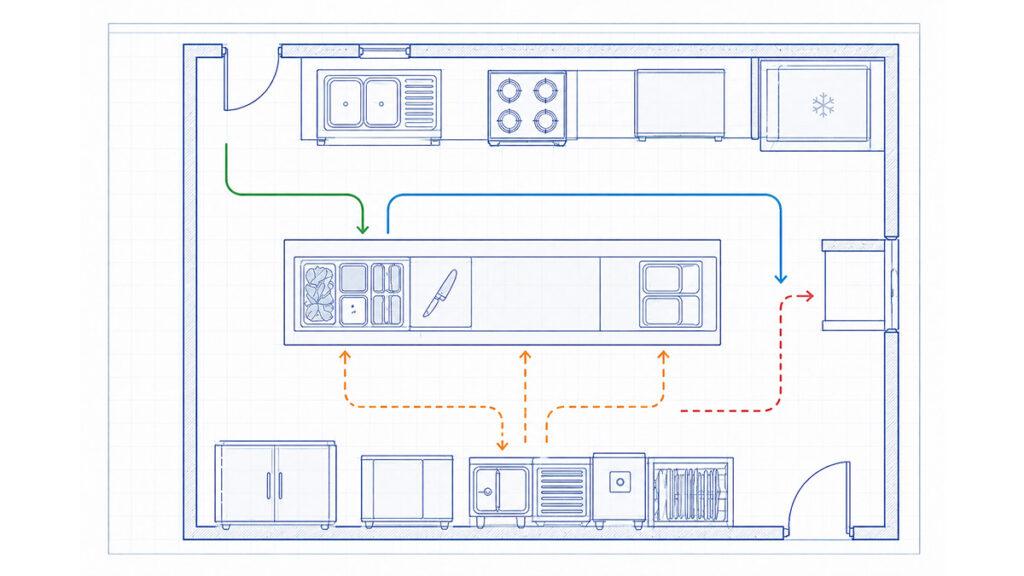
Before choosing tables or equipment, map out your kitchen’s workflow:
- Where does prep start?
- How do orders move through the line?
- Where do staff cross paths or slow down?
- Where do bottlenecks build during peak periods?
If the workflow isn’t clear, even the best layout and fixtures won’t help.
2. Key Workstation Types to Get Right
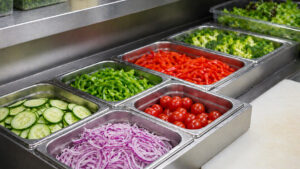
Prep Areas — Where ingredients are received, portioned, and prepped.
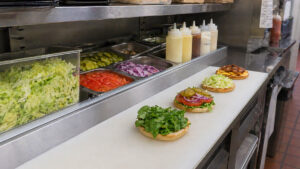
Makeline & Assembly Stations — The production line where staff create and finish orders.
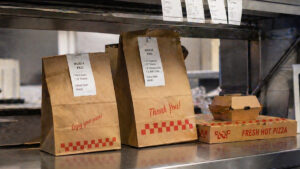
Pass‑Through and Handoff Zones — These are the points where the kitchen hands off orders to guests, whether for in-store pickup, drive-thru, or delivery.
Depending on your QSR concept, workstations might wrap around or sit across from the hot line. They often connect to drink or dessert stations and mobile order pickup areas.
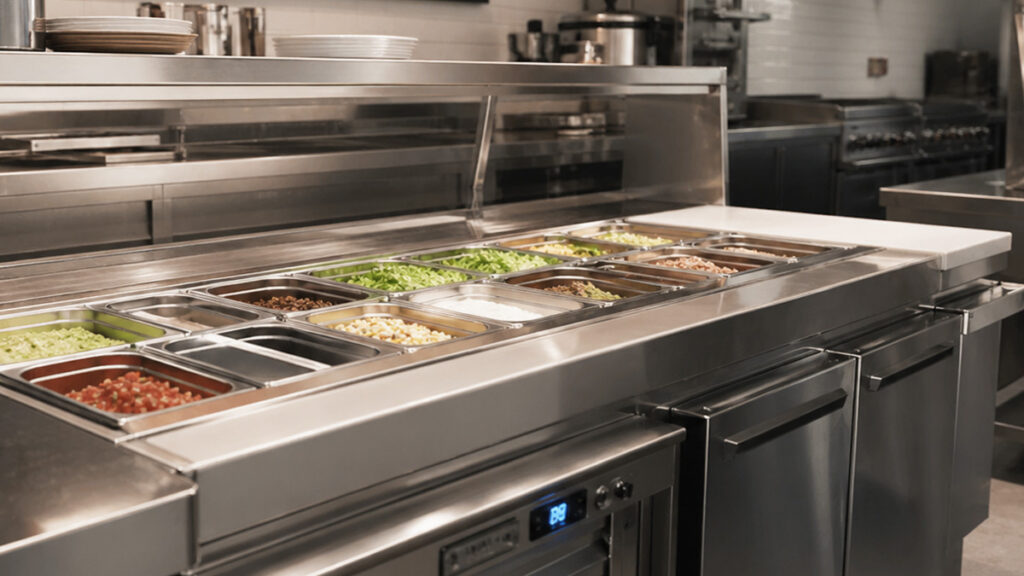 3. Food-Grade Stainless and Why It Matters
Stainless steel is the standard in QSR kitchens because it’s easy to clean and lasts a long time, especially in areas where food is prepared, cooked, or handled. But not all stainless steel or fabrication methods are the same.
Material Grades
304 Stainless Steel
- The industry standard for most QSR applications
- Corrosion‑resistant, non‑reactive, and easy to clean
- Suitable for tables, sinks, shelving, and most prep surfaces
316 Stainless Steel
- Offers higher resistance to corrosion and pitting
- Used in harsher environments (high salinity, aggressive cleaners, coastal locations)
- Higher cost, typically reserved for specific use cases
Gauge
- The gauge (thickness of the material) directly impacts durability
- 14–16 gauge is typical for worktops and heavy‑duty applications
- Thinner materials may reduce cost but are more prone to denting, vibration, and long‑term fatigue under heavy use
Construction
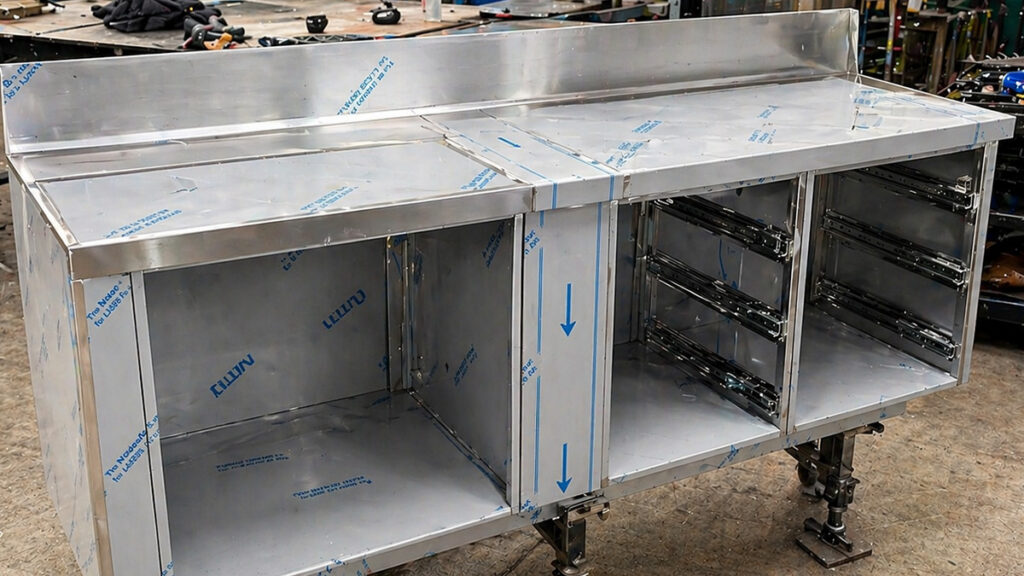
- Fully welded frames are stronger and more durable over time, and are easier to clean
- Knock-down or bolted frames are easier and cheaper to ship and install, but they are less sturdy and have joints that are harder to keep clean
Food-Grade Fabrication Details
For QSR kitchens, higher‑quality fabrication typically includes:
- Continuous welds ground smooth, with no gaps, pinholes, or crevices
- Coved internal corners to eliminate debris traps and make wipe‑downs faster
- No exposed raw edges, open tube ends, or unfinished seams
- Smooth finishes (such as 2B or finer) that are easy to clean and less likely to hold residue
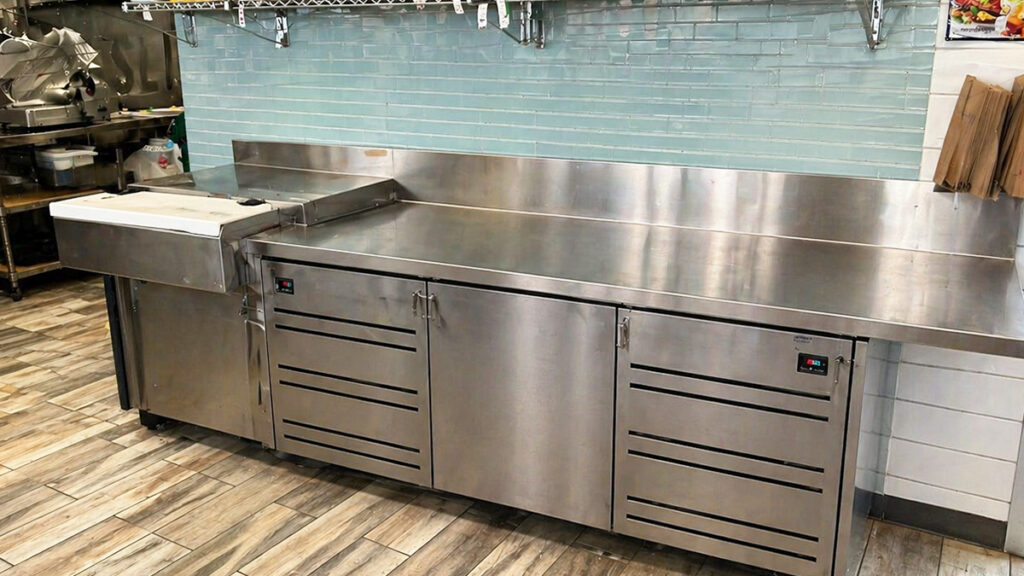 4. Why Custom Stainless Fixtures Beat Standard Work Tables
Standard catalogue work tables are made to fit as many kitchens as possible. Custom stainless fixtures, on the other hand, are made to fit just one — yours.
When QSR kitchen workstations are built to order, your back‑of‑house runs smoother, is easier to clean, and holds up better over time.
Faster Clean-Down
Custom fixtures can include slopes, drains, and rounded corners so water drains away and debris can’t collect. With fewer seams and better access around and under workstations, closing crews spend less time cleaning.
Improved Workflow Efficiency
When stations are designed for your team’s workflow, you reduce wasted steps and cross-traffic. Custom stainless lets you add cold rails, undercounter fridges, trash, smallwares, and POS right where you need them.
Fewer Installation Issues
With standard work tables, installers often cut and shim on-site to line up equipment with plumbing, electrical, and other stations. Custom fixtures are built to fit known locations and equipment needs, cutting down on modifications and surprises during install.
Longer Service Life
Custom fixtures with thicker tops and fully welded frames last longer, even with heavy use.
 5. Sourcing the Right Fabrication Partner for Custom Stainless Fixtures
The right custom fabricators do more than manufacture parts. They help turn your QSR concept into durable, repeatable fixtures that work in real kitchens and support you as you grow from one location to the next.
That’s where a design-builder like Canada’s Best Store Fixtures can turn your design files or prototype into ready-to-use stainless workstations. For Canadian QSR brands, franchisees, and operators, this means fixtures that meet local codes, withstand heavy use, and can be rolled out consistently from store to store.
When evaluating partners, consider these key questions (that get past price and lead time):
- Do they understand QSR kitchens and real‑world operations?
- Will they assist with material selection and engineering up front?
- Do they have a proven prototyping process?
- Can they support you nationally?
- Can they coordinate with trades and other vendors?
- Can they scale programs with consistency?
The Bottom Line
A long-term fabrication partner does more than build what’s on paper. They make sure fixtures fit right, installations go smoothly, and designs become reality without compromise. This reduces change orders and rework, keeps projects on time and on budget, and gives you a stainless package you can roll out as your program grows.
Get a Project Estimate
If you’re planning a new concept, renovation, or opening several locations, reach out to our retail design services team for a project estimate.
***
Research and initial drafting for this article were supported by AI tools, including Perplexity and ChatGPT. All sources were independently verified, and the final content was reviewed and edited by our team.