
The business case behind the rise of smaller, more strategic store formats.
For the past few decades, the retail growth playbook focused on two simple truths:
First, bigger is better.
Across the 1980s and 1990s, Canadian retailers pursued economies of scale through big-box centres and superstores. For example, national grocery store chains grew their footprints from under 50,000 sq ft to as much as 120,000 sq ft. Pharmacies moved from conventional stores of roughly 6,000 sq ft to large-format locations exceeding 12,000 sq ft. And fashion followed suit, expanding beyond conventional malls into big-box stores and outlets.
And second, rinse and repeat.
Once you had a successful store layout, you found the right real estate, stuck with what worked, and opened store after store.
But in 2026, a growing number of retailers are ignoring the old playbook.
They’re opening smaller stores, testing different footprints, carrying less inventory, and adapting each location to the market, product mix, and economics.
 Small Stores Are Nothing New.
For more than a decade, predictions of a “retail apocalypse” have suggested that online shopping will force brick-and-mortar retailers to close stores, reduce their footprints, or disappear altogether.
But that’s not the whole picture. According to Retail Brew’s State of Stores, 78% of U.S. retailers report making moderate or significant investments in their physical stores.
So retailers aren’t giving up on brick-and-mortar. But they are getting much more deliberate about what they expect every square foot to accomplish. They’re asking tough questions:
- How much inventory actually needs to be on the floor?
- What can be ordered online?
- What services need physical space?
- What can this particular market support?
- And how much square footage does it really take to make the economics work?
So the question is becoming less: How do we find the right market to support our footprint?
And more: How much store does this market actually need?
And some of Canada’s biggest retailers are coming up with very different answers.
 IKEA Is Shrinking. Sort Of.
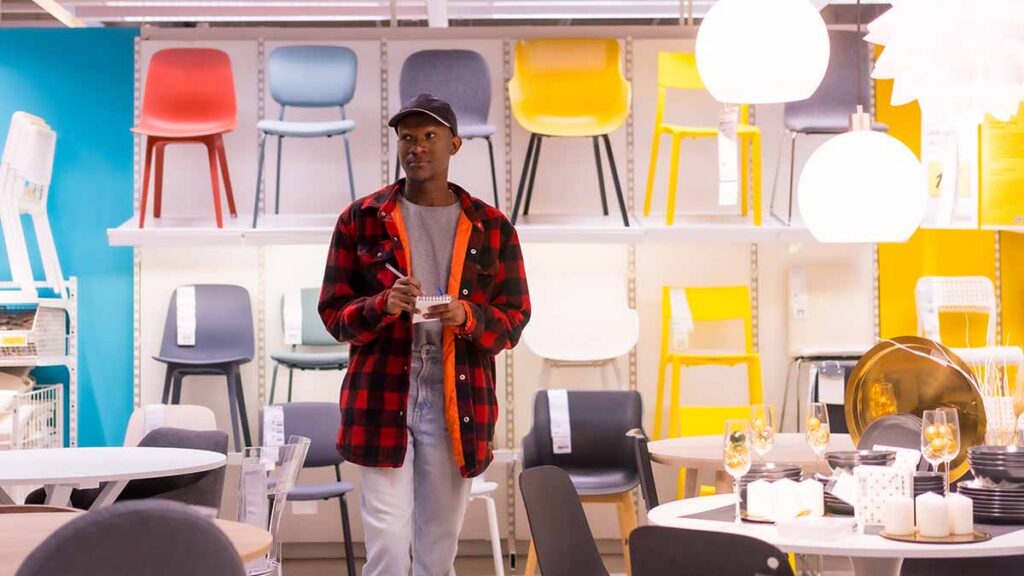
September 2026 marks the launch of IKEA Canada’s first compact store.
Calling 43,000 sq ft “compact” may sound ridiculous. But considering the new store at White Oaks Mall in London, Ontario, is roughly one-fifth the size of IKEA’s Burlington location, it helps put things into perspective.
This isn’t IKEA’s first experiment with smaller footprints. Over the past few years, they’ve tested everything from small Design Studios to Plan and Order Points to Standalone Pickup Locations.
The difference in London is that IKEA is bringing more of the traditional store experience back together, just in a much smaller box.
So when you’re working with one-fifth the space, what gets cut?
Well, we assume the never-ending maze was the first thing to go. But customers can still explore room settings, get planning support and order anything from IKEA’s full product range for delivery or pickup.
In other words, IKEA isn’t trying to squeeze its traditional store into one-fifth the space.
IKEA says these smaller stores are faster and more cost-effective to open and operate, letting the company enter more communities without committing to a traditional IKEA-sized footprint.
Same brand. Different format. More markets to enter.

Source: No Frills
No Frills Cut the Store in Half.
If IKEA is experimenting with smaller stores, No Frills is already proving they can scale.
In 2025, Loblaws opened 48 new No Frills and Maxi locations across Canada. Thirty-nine were small-format stores.
And some are seriously small.
The new format can squeeze a full grocery shop into as little as 10,000 sq ft, less than half the size of a traditional No Frills.
So, what’s the trick?
Focus on Core Products and Brands.
Think about the yogurt aisle. Greek. Skyr. High-protein. Lactose-free. 0%. 2%. Cups. Tubs. Multipacks. And approximately 400 flavours of strawberry.
Okay, maybe not 400. But that’s the opportunity. Aisles get shorter and narrower. Shelves get taller. The assortment gets smaller.
The result is a No Frills that can fit into neighbourhoods and real estate the traditional format couldn’t.
Same brand promise. Tighter assortment. More places it can work.
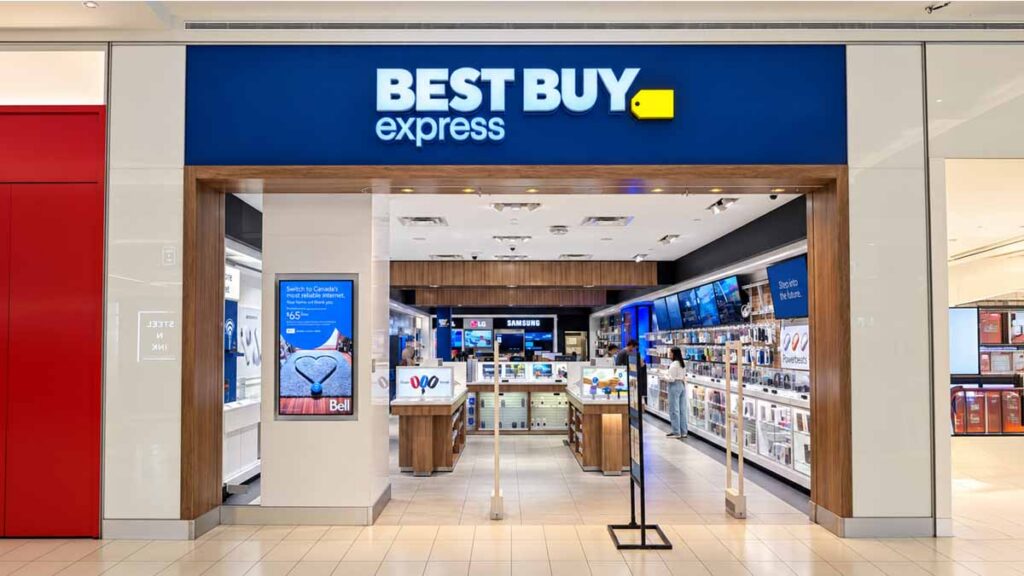 Best Buy Doesn’t Need to Stock Everything.
Back in 2024, Best Buy found a new Source for smaller stores.
(I know somewhere out there a retail historian is chuckling at that.)
In partnership with Bell, Best Buy converted 167 former The Source locations into Best Buy Express stores.
So while you’ll no longer be able to shop for a new fridge and surround sound system in a single stop, Best Buy Express carries a selection of popular tech and accessories, with access to Best Buy’s much larger assortment online.
And that’s the trade-off.
A smaller store can’t stock everything.
So the merchandising team has to curate what deserves shelf space.
By looking at real-world data like sales velocity, margins, and demand, they can get pretty ruthless about what stays and what goes. What needs to be seen in person? What’s perfect for browsing and discovery? And what can be left to a traditional Best Buy or the online marketplace?
For Best Buy, shrinking the footprint means being much more selective about what earns a spot on the shelf. And for customers, that can mean less hunting through aisles and a faster trip through the store.
Smaller space. Less inventory. Faster shopping experience.

Source: BeautySpace
A Teeny Tiny Extreme.
In September 2026, Little Luxuries opened its first store in New York City’s Union Square.
It’s 765 sq ft. Yeah, that’s roughly the size of 5 parking spots.
Now imagine squeezing more than 100 prestige beauty brands into a candy shop-style experience. Think of Willy Wonka for beauty and cosmetics.
Here’s what makes the concept interesting.
Little Luxuries sells one thing: minis. The travel-sized and trial-sized versions of the beauty products you’d normally find at Sephora or a department store.
Mini skincare. Mini makeup. Mini haircare. Mini fragrances.
The whole experience is designed around bright displays, heaps of variety, constant discovery, and small products you can pick up and try without committing to the full-sized version.
And suddenly, the tiny footprint isn’t a compromise. It’s part of the brand experience.
Little Luxuries didn’t start with a conventional beauty store and figure out how to make it smaller. It built the entire concept around products that happen to be small.
Tiny footprint. Huge assortment.
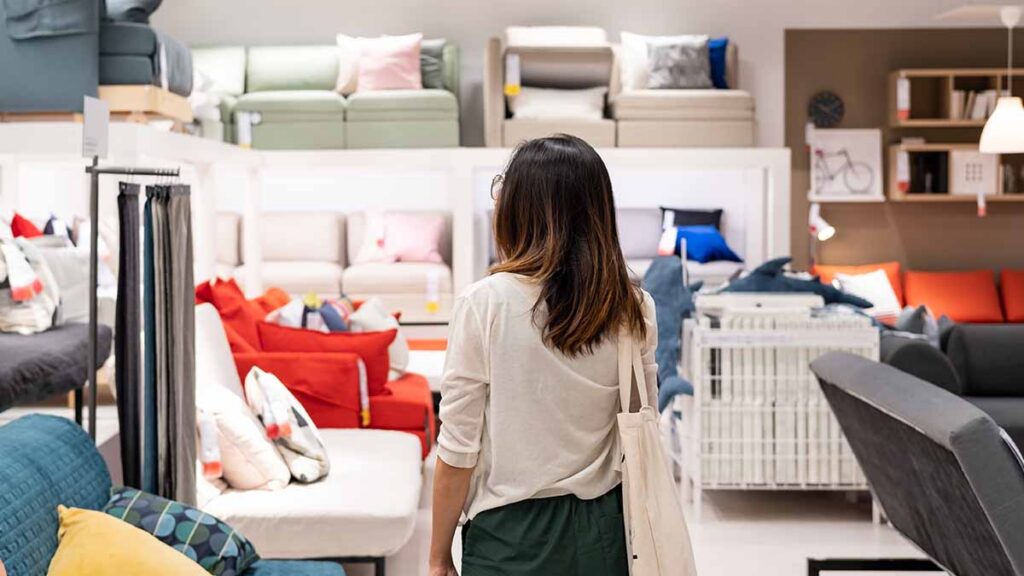 Smaller Stores. More Markets.
There’s an obvious advantage to building smaller stores: more markets and location options become viable.
But there are other advantages too. Lower buildout costs. Less inventory tied up on the sales floor. And potentially a faster, more flexible path into new markets.
At least, on paper.
Because smaller stores also create new challenges for retail design and development teams.
And we’ve been helping retailers solve those challenges for more than 20 years. Want proof? Here’s how we helped Lowe’s Canada cut its footprint in half back in 2014.
The floor plan changes. Fixtures and displays change. Merchandising requirements change.
But the store still needs to feel like your store. And that’s where the opportunity goes beyond simply shrinking the footprint.
Build a format that can adapt to the market, instead of always looking for a market that fits the format.
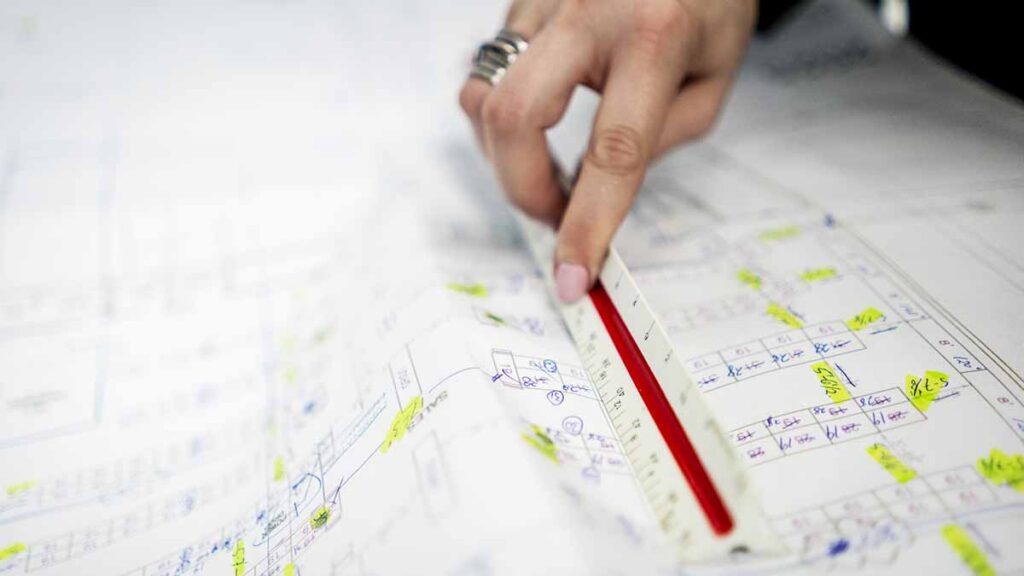 Call it Retail Tetris.
The trick isn’t figuring out how to squeeze the same store into a smaller box.
It’s designing a system that can adapt:
- Make a fixture narrower, and you lose merchandising capacity
- Go taller, and you change sightlines
- Add storage, and you have to engineer for load
- Change the product mix, and you may need a completely different display
That’s where modularity becomes the foundation of building adaptable retail environments.
At CBSF, we take a retail concept and figure out how to build it across different locations. What needs to remain consistent? What can change? And how can fixtures, materials and construction details adapt without losing the original design intent?
The goal isn’t to have 100 identical stores. It’s a repeatable system that can produce 100 versions of the same store.
Planning A New Store or Renovation?
Canada’s Best Store Fixtures works with retail design, construction, and store development teams to turn concepts into buildable retail environments.
Contact our team to get a quote.
***
Editorial Standards: CBSF publishes original insights, technical resources, and project case studies developed by our team. Where appropriate, research and drafting may be supported by AI-assisted tools. All published content is independently verified, reviewed, and edited by subject matter experts before publication.
